
The current economic situation is characterized by major geopolitical uncertainties, increasing international competition and, furthermore, massive technological disruptions. In addition, there are domestic challenges in Germany, such as energy costs and bureaucracy. Many traditional and proven products, services and business models are currently coming under increasing pressure. In his introduction to the event, Ulrich Dietz pointed out that, based on his observations during numerous visits to members of the Economic Council, innovation is a key to success, if not survival itself, in such situations. However, it is particularly difficult in such circumstances to develop new business areas and to lead them to success whilst simultaneously tackling the immediate challenges at hand. This event organized by the Economic Council therefore examined and discussed successful examples of innovation.
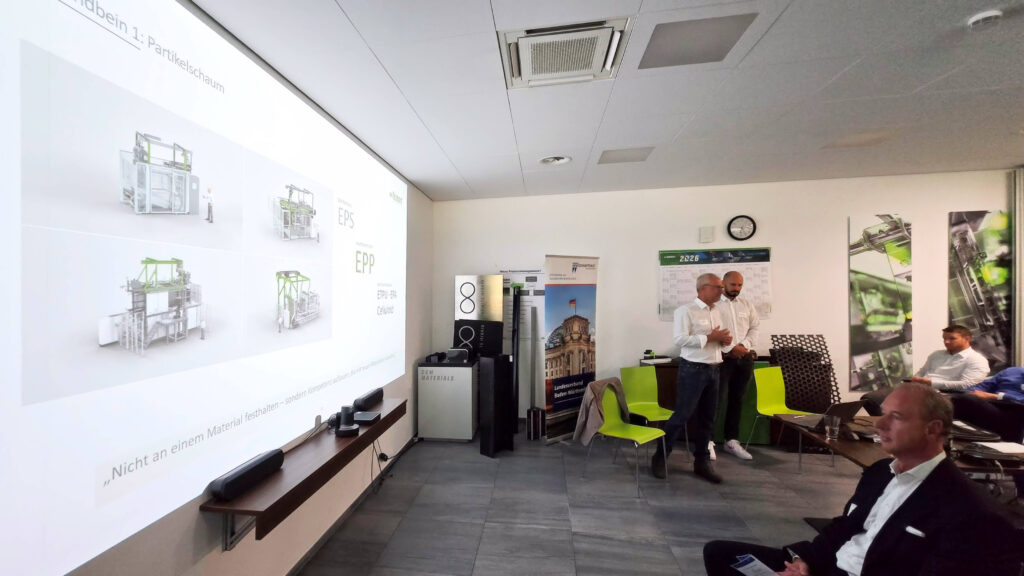
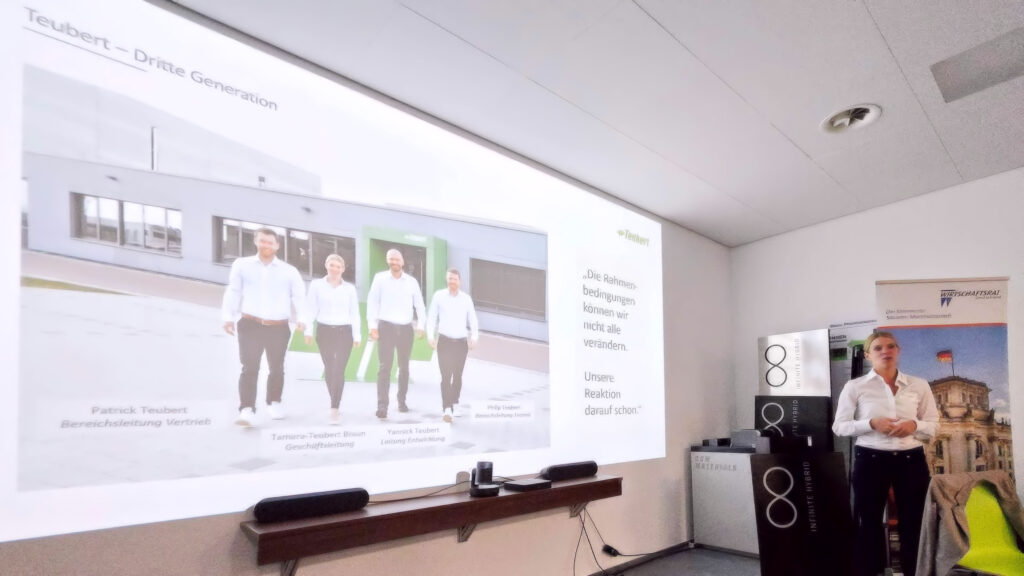
The event was hosted by Teubert Maschinenbau GmbH, a third-generation, family-run SME that manufactures innovative specialized machinery and successfully markets it worldwide. Managing Director Wolfgang Teubert, his daughter Tamara Teubert-Braun (authorized signatory) and his son Yannick Teubert (Head of Development) explained how innovations are developed within their company and utilized as a key to success.
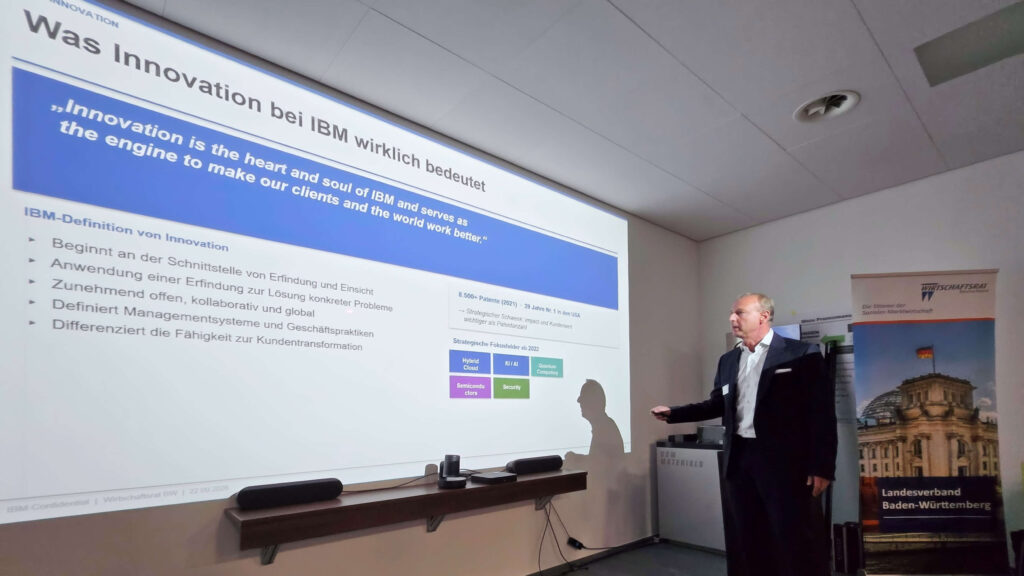
Following this, Jürgen Braun, Vice President and Senior Partner at IBM (and without family relation to Tamara Teubert-Braun), gave an overview about the history of IBM. IBM is a prototype example of a company which, now for over 115 years, has not only played a key role in shaping the world of IT, but has also repeatedly become one of the market leaders through innovation during this time. At the same time, IBM has not shied away from selling off even profitable business units in order to focus on future innovations. Mr Braun explained which measures and which corporate culture at IBM are the key factors for success, and how IBM is preparing for future technological upheavals.
The event was rounded off with a tour through the company, followed by a get-together where participants were able to exchange their impressions and insights in detail. In particular, the discussion touched on how similar or how different the innovation mechanisms and challenges are between a German SME and a large multinational corporation.
Many thanks to the hosts and speakers for their valuable insights and suggestions!