

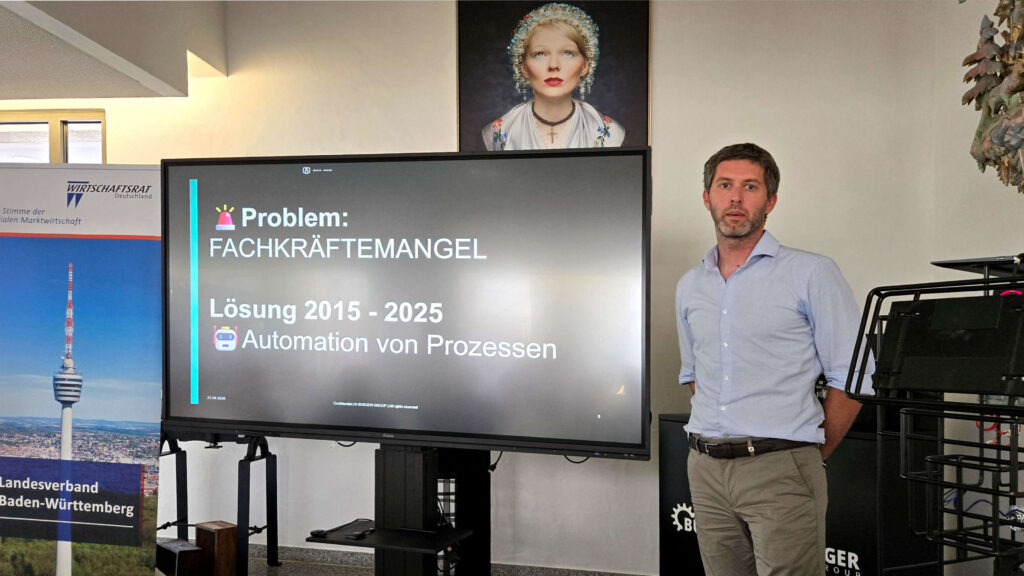
In numerous discussions with local entrepreneurs, the same issues kept cropping up: alongside bureaucracy and energy costs, the acute shortage of skilled workers has, in many cases, become a matter of survival. Ulrich Dietz therefore organized an event on this topic with the Economic Council. Essentially, there are two fundamental approaches to tackling this problem: Whilst in particular industrial companies are often automating their production processes to an ever-greater extent, small and medium-sized enterprises and craft businesses are increasingly recruiting skilled workers from abroad in a targeted manner to fill vacancies. This problem is not yet caused by demographic change, but rather stems from the specific characteristics of the German school and vocational training system and, to some extent, also from regional challenges.
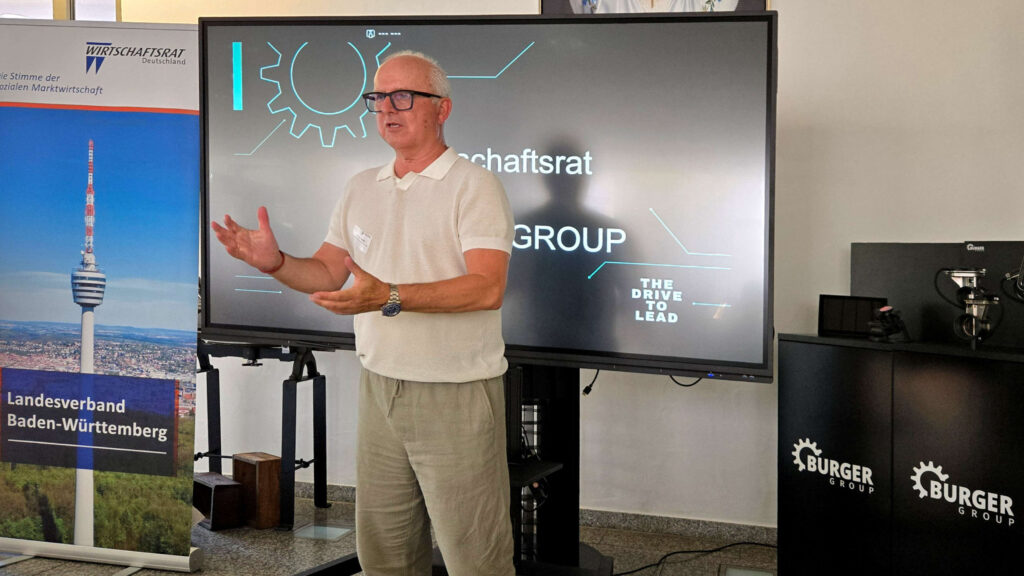
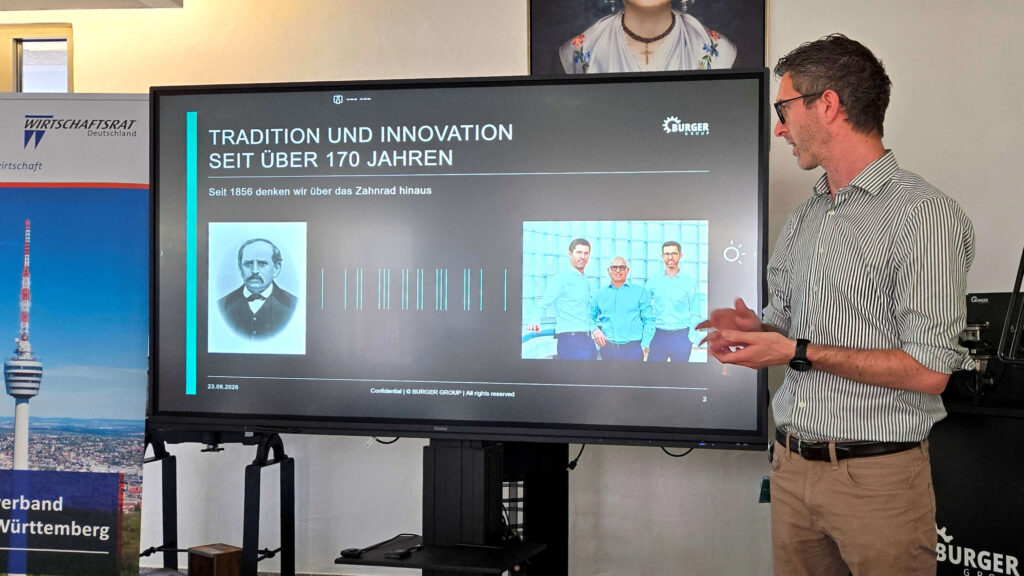
The event organized by the Section Villingen-Schwenningen/Donaueschingen of the Economic Council took place in cooperation with the Young Economic Council. The host was SBS-Feintechnik GmbH & Co. KG in Schonach, a tradition-rich company within the Burger Group, which operates in the fields of gear technology and mechatronics. Several members of the Burger family provided fascinating insights into the structure and history of the Burger Group, as well as the automation solutions utilized by the Burger Group.
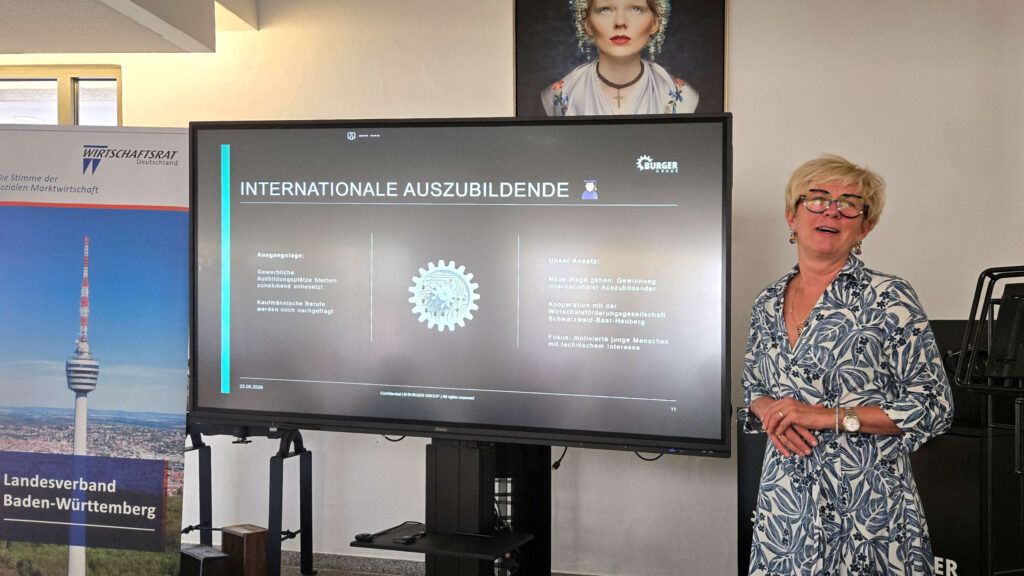
Silke Burger then explained how the Burger Group recruits international apprentices. The Burger Group has now taken on a number of apprentices from Indonesia and is extremely satisfied with their performance. Following initial problems with the recruitment agency, the Burger Group now uses other channels for recruitment.
A second impressive example of recruiting international skilled workers was presented by Joachim Lederer, owner of the Lederer butcher’s shop in Weil am Rhein and Regional Guild Master of the Baden-Württemberg State Guild Association for the Butchery Trade. Several years ago, he began recruiting young people from India, initially for his own butcher’s shop and meanwhile also for other craft businesses. This process began with a thorough vetting of the recruitment agency, and the relevant business models were agreed upon and have since been further refined. His aim is to ensure that the collaboration is fair and binding for all parties and that the young apprentices are not exploited. He also shared some tips on how he further motivates his Indian apprentices and fosters a strong sense of community.
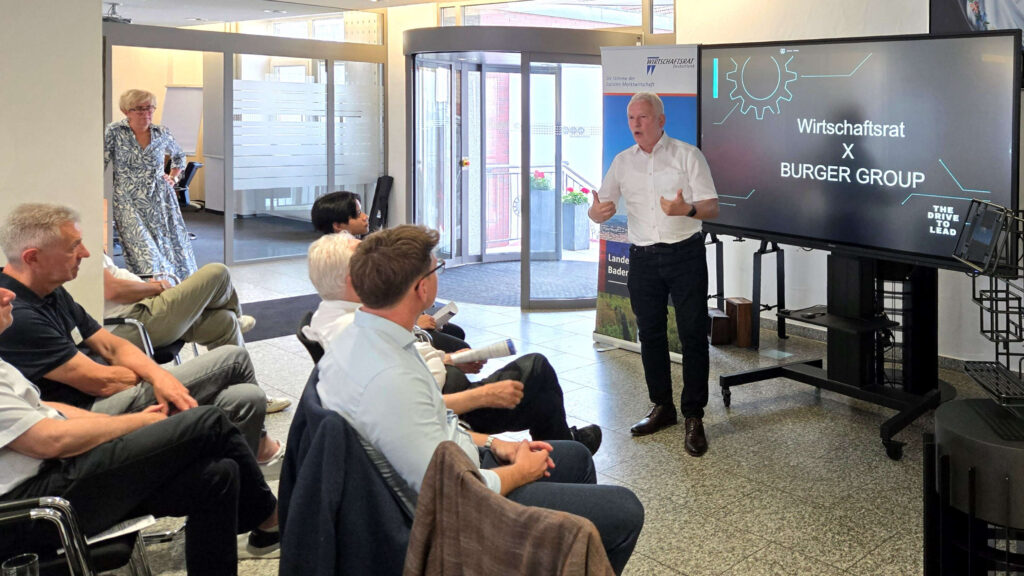
Joachim Lederer’s experiences with his Indian apprentices have also been entirely positive. Some of his apprentices had even completed a bachelor’s degree in India before coming to Germany. He also brought along one of his apprentices, who spoke very good German and shared his reasons for coming to Germany and his experiences here.
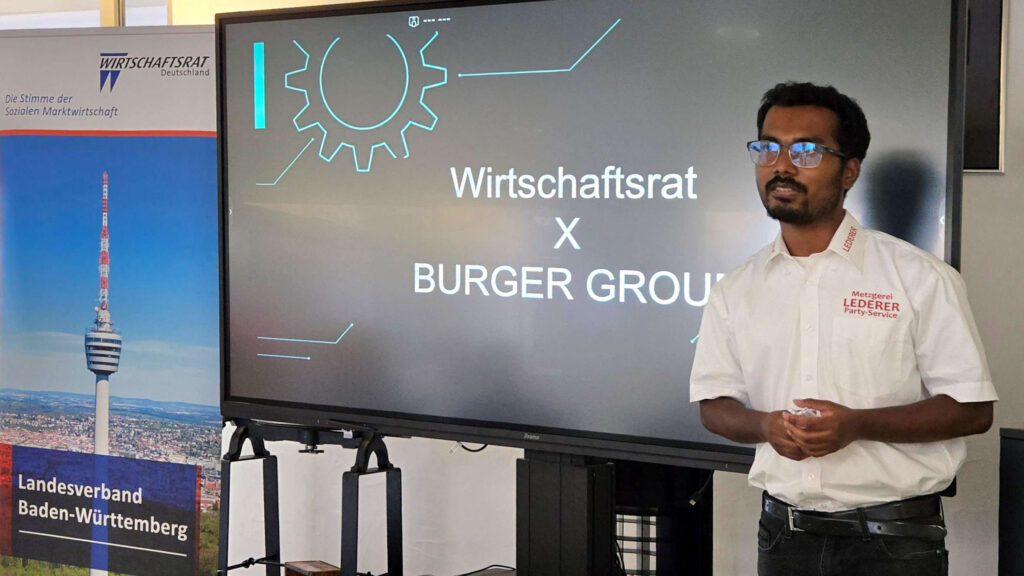
The following lively discussion provided an opportunity to compare experiences. Both approaches have clearly demonstrated that the motivation and capabilities of international apprentices are impressive, and that the apprentice-training companies are highly satisfied. However, it also became clear that it is important to use the right channels and agencies for recruitment. A thorough background check of the agencies is imperative and may not always be carried out completely reliably by the Chambers of Industry and Commerce (IHKs) or Economic Development Organizations. In particular, offers that are free of charge for companies ultimately mean that the cost, which always incur, must be borne entirely by the young people themselves; and consequently, there may be a lack of the necessary commitment on the part of some German companies. Furthermore, there are some unscrupulous agencies that act unethically to place apprentices in a position of dependency.
Note: aproxITo has suitable Indian business partners and/or can establish respective contacts.
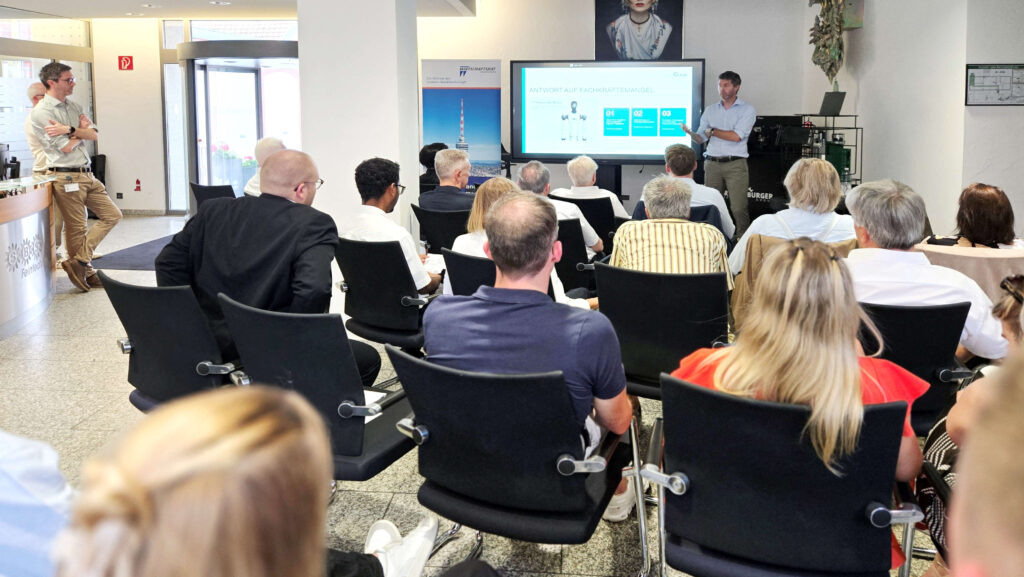
To round off the presentations, Manuel Burger gave an insight into the company’s innovation plans.
Thank you to Thomas Burger, Managing Shareholder of BURGER HOLDING GmbH & Co. KG, and to his family for the impressive presentations! And a special thank you also to Joachim Lederer for his compelling report and for sharing his valuable insights!
If you’d like to see Joachim Lederer in his own words, you’ll find related videos on YouTube via the following links:
TV coverage on SAT.1 (4:10 min)
Interview with Joachim Lederer (10:15 min)
TV coverage on SWR (24:12 min)